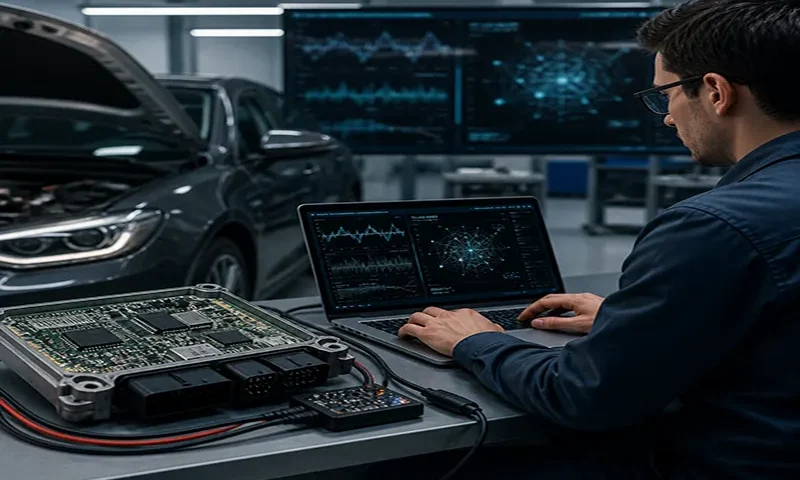
Beyond the Fault Code: Using AI Predictive Diagnostics to Identify ECU Hardware Failure Symptoms

In the automotive engineering landscape of 2026, the traditional “Check Engine Light” has become an artifact of the past. As vehicles transition into high-performance Software-Defined Vehicles (SDVs), the industry has moved beyond reactive Diagnostic Trouble Codes (DTCs) toward agentic, real-time Prognostics and Health Management (PHM).

Today, the goal is no longer to identify that a module has failed, but to detect the “micro-symptoms” of hardware degradation weeks before a malfunction occurs. By leveraging Agentic AI at the edge, modern EVs can now sense their own digital pulse, identifying imminent hardware failures in Electronic Control Units (ECUs) that were previously invisible to rule-based systems.

1. The Physics of ECU Failure: Identifying “Silent Symptoms”

Hardware failure in an ECU rarely happens instantaneously. It is usually the result of long-term stressors—thermal cycling, vibration, or electrical overstress—that leave measurable traces in the vehicle’s telemetry. AI models in 2026 are trained to identify … READ MORE ...

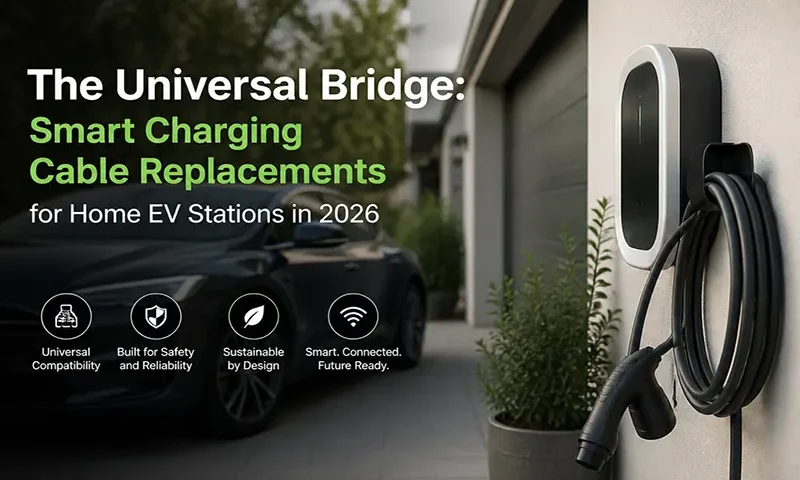
The Universal Bridge: Smart Charging Cable Replacements for Home EV Stations in 2026

The home garage has transformed. No longer just a storage space for vehicles, it has become a sophisticated energy hub where the grid, the home, and the vehicle converge. As we move through 2026, the most critical piece of this infrastructure isn’t necessarily the wallbox itself, but the tether that connects it to the car.

The modern charging cable is no longer a “dumb” copper wire; it is a high-speed data link and a smart power regulator. With the industry-wide shift toward the North American Charging Standard (NACS), homeowners are facing a “Universal Dilemma”: how to manage a household that may have one legacy J1772 vehicle and one new NACS-native vehicle without cluttering the garage with multiple stations and tangled adapters.

1. The Shift to Universal Interoperability

By 2026, NACS has become the dominant port for new EVs in North America, but millions of perfectly functional J1772-equipped vehicles remain … READ MORE ...

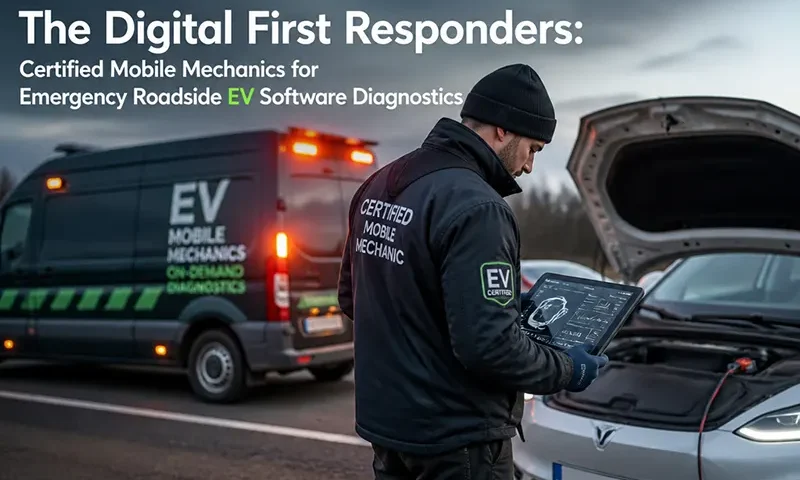
The Digital First Responders: Certified Mobile Mechanics for Emergency Roadside EV Software Diagnostics

In the automotive landscape of 2026, the “breakdown” has been redefined. While internal combustion engines traditionally succumbed to mechanical failures—broken belts, fuel pump clogs, or radiator leaks—the modern Electric Vehicle (EV) is a sophisticated “computer on wheels.” Consequently, the most common reason for an EV becoming immobilized today isn’t a mechanical snap, but a software “handshake” failure or a logic loop in the Battery Management System (BMS).

The emergence of Certified Mobile EV Software Technicians marks a pivotal shift in roadside assistance. We are moving away from the era of the flatbed tow truck and toward the era of the “Digital First Responder”—highly skilled technicians who arrive in mobile cyber-labs to perform curbside triage on complex software-defined vehicles.

1. The Software-Defined Breakdown

For a 2026 EV, immobilization often occurs when the vehicle’s “brain” detects a conflict it cannot resolve. This might manifest as a vehicle that refuses to shift … READ MORE ...

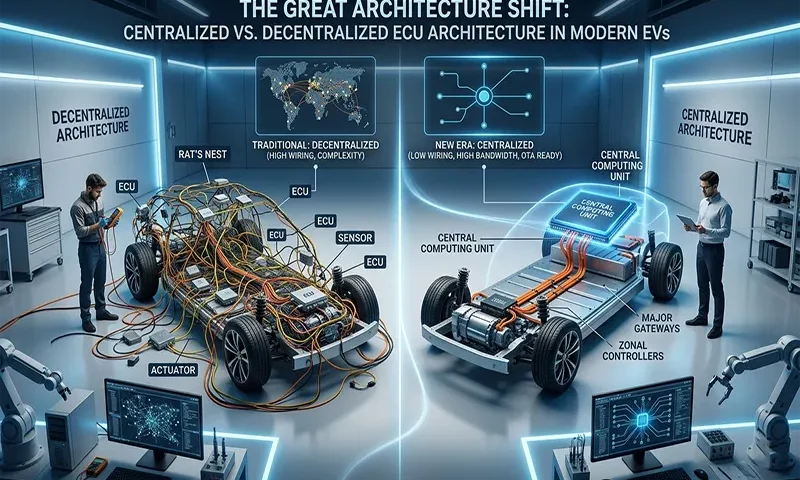
The Great Architecture Shift: Centralized vs. Decentralized ECU Architecture in Modern EVs

The automotive industry is currently navigating its most significant structural transformation since the invention of the assembly line. As we move through 2026, the focus has shifted from the mechanical “nuts and bolts” to the “bits and bytes.” At the heart of this revolution is a fundamental change in vehicle E/E (Electrical/Electronic) architecture. The transition from traditional, decentralized systems to centralized, zonal models is not just a technical preference; it is a survival requirement for the Software-Defined Vehicle (SDV) era.

1. The Complexity Crisis: The Wiring Harness Nightmare

For decades, the standard approach to vehicle electronics was “one function, one ECU.” If a manufacturer wanted to add power seats, they added a dedicated Electronic Control Unit (ECU) under the seat. By the early 2020s, premium vehicles reached a breaking point, carrying over 100 independent ECUs connected by miles of copper wiring.

This “Distributed Architecture” created a Wiring Harness Nightmare. … READ MORE ...