
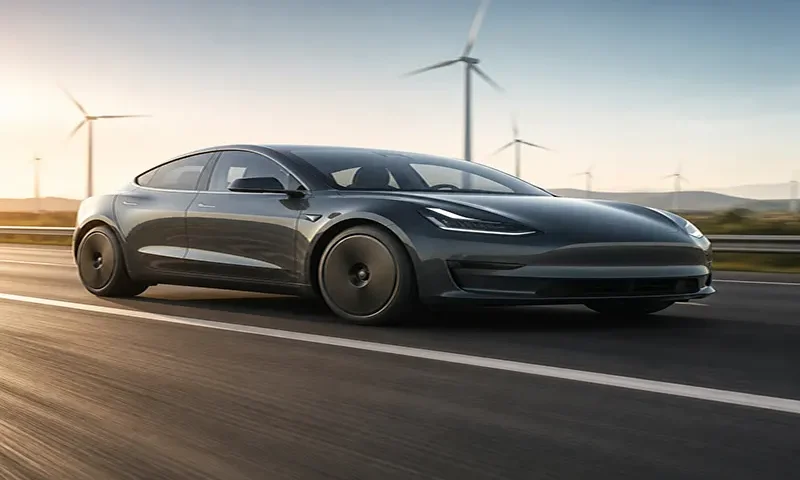
In the world of internal combustion, horsepower was king. In 2026, the crown has shifted to efficiency. For Electric Vehicle (EV) owners, the quest to squeeze every possible mile out of a kilowatt-hour has led to a resurgence of a once-overlooked accessory: the aerodynamic wheel cover.
While many view wheels as purely aesthetic, engineers know they are an aerodynamic nightmare. As a vehicle moves, the wheels are responsible for roughly 25–30% of its total aerodynamic drag. In the software-defined EV era, aftermarket aero covers have evolved from “cheap plastic hubcaps” into precision-engineered performance tools that can significantly alter your vehicle’s range profile.
1. The Physics of Airflow: Laminar vs. Turbulent
To understand why aero covers work, we must look at how air behaves around a spinning wheel. At highway speeds (above 60 mph), the air hitting the side of your car wants to stay “attached” to the body in a smooth, laminar flow.
- The Vortex Problem: Open-spoke wheels act like high-speed “egg beaters.” As they spin, the spokes chop through the air, creating massive turbulence and high-pressure vortices within the wheel wells. This turbulent air creates a “parasitic drag” that the motor must fight to overcome.
- Pressure Management: A flat-plane aero cover creates a “pressure shield.” It encourages the air to glide over the face of the wheel rather than being sucked into the spokes. This maintains the boundary layer of air along the side of the vehicle, significantly lowering the Coefficient of Drag ($C_d$).
2. The 5% Rule: Real-World Gains
By 2026, computational fluid dynamics (CFD) testing has confirmed that a well-designed full-coverage aero lid can reduce a vehicle’s total $C_d$ by 0.01 to 0.02. While that number sounds small, the impact on range is measurable.
- Highway Efficiency: Real-world data shows that high-quality covers improve highway efficiency by 3% to 6%.
- The Range Math: For a vehicle with a 300-mile base range, a 5% increase adds 15 miles of travel. This is the equivalent of “finding” an extra 3-4 kWh of battery capacity for the cost of a few hundred dollars.
| Wheel Type | Efficiency Gain (%) | Est. Range Increase (300mi Base) |
| Open-Spoke Sport | 0% (Baseline) | 0 Miles |
| Partial Aero (Inserts) | 1.5% – 2.5% | 4.5 – 7.5 Miles |
| Full Solid Aero Cover | 4.0% – 6.0% | 12 – 18 Miles |
| Active/Vented Aero (2026) | 5.5% | 16.5 Miles |
3. The Thermal Trade-off: Brake Cooling
The primary argument against solid aero covers has historically been heat. Brakes generate immense thermal energy, and covering the wheel restricts the airflow needed to cool the rotors.
Innovative 2026 Solutions:
- Centrifugal Venting: Modern aftermarket designs use angled internal vanes that act as a centrifugal fan, actively pulling hot air out from the center of the wheel even while the face remains mostly closed.
- Active Gills: High-end 2026 covers utilize shape-memory alloys. When the air behind the cover reaches a certain temperature (e.g., during a mountain descent), “gills” in the cover physically open to increase airflow, then snap shut once cooled to restore aerodynamic efficiency.
4. Material Science and 2026 Fitment
Gone are the days of brittle plastic caps that fly off on the highway. The 2026 aftermarket specializes in “Eco-Chic” materials that balance weight with durability.
- Forged Carbon & Polycarbonate: Premium covers now use carbon-fiber-infused polymers that weigh less than 800g per wheel. This ensures that the aerodynamic gain isn’t negated by an increase in unsprung rotational mass, which would hurt acceleration.
- Universal Core Systems: Most 2026 brands have moved toward a “Universal Core.” You buy a mounting ring that snaps onto standard 18” or 19” alloy rims (common on the Tesla Model 3/Y, Hyundai Ioniq 6, and Rivian R1S), and you can swap different “skins” depending on whether you want maximum range for a road trip or a sportier look for the city.
5. Installation and Maintenance Tips
To get the most out of your aero covers, proper installation is key:
- Anti-Vibration Gaskets: Ensure your covers come with EPDM rubber gaskets. Without these, road grit can get trapped between the cover and your alloy rim, causing permanent scratches.
- Brake Dust Management: Because airflow is reduced, brake dust can accumulate more heavily behind the cover. In 2026, it is standard practice to remove and spray out the covers every 5,000 miles to prevent “caking,” which can throw the wheel out of balance.
Efficiency is the New Horsepower
In 2026, the most efficient $200 you can spend on your electric vehicle isn’t a software upgrade or a premium tire—it’s a set of aerodynamic wheel covers. By managing the turbulent wake and encouraging laminar flow, these covers offer a rare “free lunch” in physics: more range, less noise, and improved highway stability. As we move toward a world where every mile matters, slicing the wind is no longer an option; it’s a necessity.

