
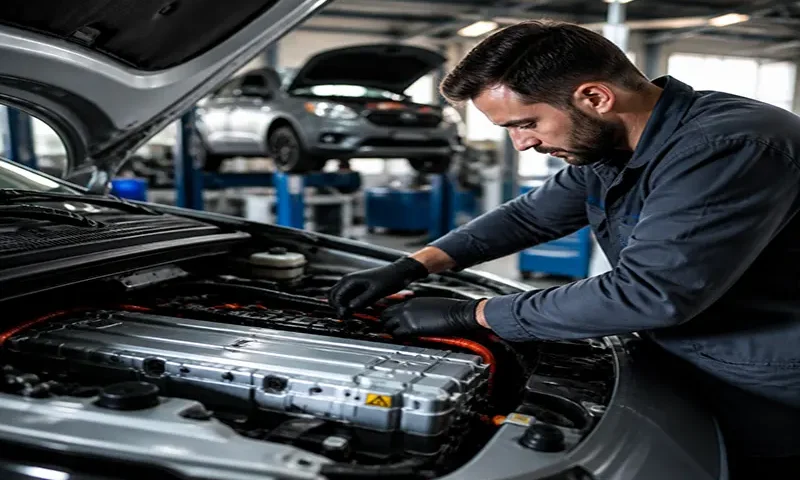
In the automotive landscape of 2026, the “Red Triangle of Death” or a “Check Hybrid System” light is no longer a signal to scrap your vehicle. As hybrid technology has matured, a robust secondary market of independent specialists has emerged, offering alternatives to the high-cost “replace-only” culture of dealerships.
For the modern hybrid owner, maintaining the high-voltage (HV) system is a game of temperature and chemistry. Understanding how to find the right local expert for battery conditioning and cooling system repair can extend your vehicle’s lifespan by 5–7 years while saving you thousands in unnecessary hardware replacements.
1. The Longevity Paradox: Conditioning vs. Replacement
One of the most persistent myths in 2026 is that a hybrid battery is a single, monolithic part that fails all at once. In reality, a hybrid pack is a collection of individual modules. Over time, these modules drift out of balance—some overcharging while others underperform.
- Battery Conditioning (Rebalancing): This is a therapeutic process where a specialist uses professional-grade cyclers (like those from NuVant or Midtronics) to deep-cycle the battery. This breaks down crystalline “memory” structures and restores Ampere-hour (Ah) capacity.
- The Cost Benefit: While a full 2026 OEM battery replacement can range from $2,800 to $4,500, professional conditioning typically costs between $1,200 and $1,800. For a vehicle with 150,000 miles, this “mid-life refresh” can restore up to 95% of original performance.
2. The Unsung Hero: The Cooling System
If the battery is the heart of your hybrid, the cooling system is its immune system. In 2026’s increasingly volatile climates, thermal management is the #1 factor in battery longevity.
- The “Dust Trap” Phenomenon: Hybrid battery fans often pull air directly from the cabin. Over 30,000–50,000 miles, pet hair, dust, and debris clog the fan and internal ducts.
- Symptoms of Cooling Failure: If you hear a loud, persistent fan noise from the rear of the car or notice your fuel economy (MPG) dropping by 10–15%, your cooling system is struggling. Heat is the primary killer of NiMH and Li-ion cells; a specialized local mechanic won’t just look at the battery—they will perform a full “hygienic service” on the intake filters and blower motors.
3. How to Identify a Qualified Local Specialist
Not every shop with a “Hybrid” sign is equipped for high-voltage work. In 2026, look for these specific indicators of expertise:
Certifications to Verify
- ASE L3 Specialist: The gold standard. This certification proves the technician has mastered the complex diagnostics of hybrid/EV power electronics.
- Safety Protocols: Ask the shop about their “Lockout/Tagout” procedures. A true pro will discuss insulated tools (CAT III/IV rated) and high-voltage PPE.
Transparency & Tools
The best local shops provide data, not just opinions. A top-tier hybrid mechanic will offer:
- Module Delta-Voltage Reports: A printout showing the voltage variance between your strongest and weakest modules.
- Internal Resistance Logs: Evidence of how much heat your battery is generating internally.
4. Warning Signs: When to Call a Pro
| Symptom | Probable Cause | Urgency |
| Rapid SoC Fluctuations | Module imbalance / Aging cells | High: Requires conditioning |
| Loud Fan in Backseat | Obstructed air intake / Overheating | Medium: Clean filters immediately |
| Engine Running Constantly | Battery unable to hold “EV Mode” charge | High: Diagnostic required |
| “Check Hybrid System” Light | Critical fault code (e.g., P0A80) | Immediate: Do not clear and ignore |
5. Buyer’s Guide: 3 Questions to Ask Your Mechanic
Before handing over your keys, use these 2026-specific screening questions:
- “Do you provide a ‘State of Health’ (SoH) report before and after service?” (A reputable shop should prove the improvement).
- “Is the battery cooling fan cleaning included in your diagnostic fee?” (It should be part of any battery-related service).
- “What is the warranty on conditioned modules?” (Look for at least 12–24 months/unlimited mileage from independent specialists).
Proactive Stewardship
By 2026, the data is clear: hybrids that undergo regular cooling system inspections and a once-per-decade battery conditioning service easily cross the 300,000-mile mark. Finding a local specialist who understands the synergy between thermal management and cell chemistry is the best investment you can make for your vehicle. Use directories like ASE’s Blue Seal Locator or manufacturer-certified independent networks to find a pro who can keep your hybrid’s pulse strong.

