The Three-Wheel Revolution: Ultra-Compact Electric Cars for Eco-Friendly City Commuting in 2026

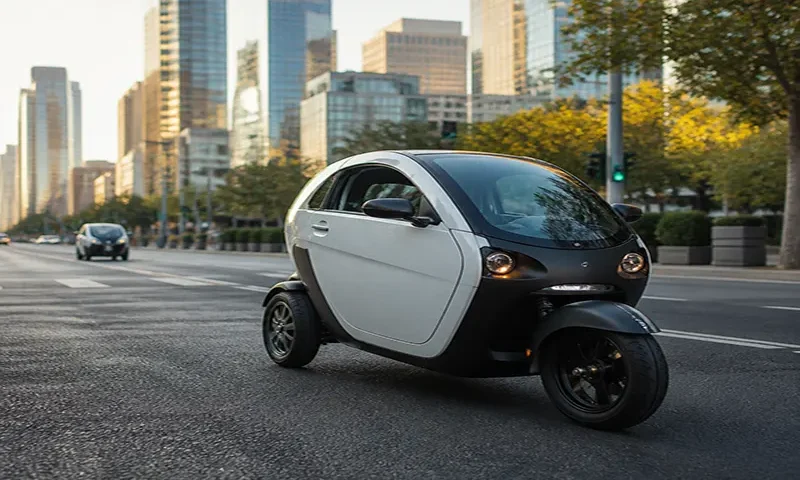
In the dense urban centers of 2026, the traditional four-door sedan has become a liability. As metropolitan areas worldwide enforce stricter congestion zones and “15-minute city” initiatives, a new category of vehicle has reclaimed the asphalt: the ultra-compact three-wheel electric car.

These vehicles, often classified as “autocycles,” address the fundamental geometry of urban congestion. With 76% of commuters still traveling alone in 2,000kg vehicles, the math of the modern city simply didn’t add up. Enter the 2026 three-wheeler—a marriage of motorcycle agility and automotive safety.

1. The Engineering of Efficiency: Less is More

The brilliance of the 2026 ultra-compact lies in its extreme weight-to-range ratio. By shedding the fourth wheel and the massive structural requirements of a 2-ton SUV, these vehicles redefine what a kilowatt-hour can achieve.

  • Curb-Weight Optimization: Most 2026 models weigh between 500kg and 800kg. This allows for a 100+ mile range using a modest 10-20kWh battery,
READ MORE ...
Top software defined vehicles with subscription based feature updates 2026

The year 2026 marks the definitive end of the “static car.” The automotive industry has fully pivoted to Software-Defined Vehicles (SDVs), where a car’s capabilities are no longer frozen at the moment it leaves the factory. By decoupling hardware from software through zonal architecture, manufacturers are now treating cars as rolling smartphones, offering continuous performance tuning and “Features on Demand” (FoD) via subscription.

1. The SDV Pioneers of 2026

Tesla: The V12 Ecosystem

Tesla remains the benchmark for digital-native OEMs. In 2026, the focus has shifted from simple range updates to sophisticated AI integration.

  • Full Self-Driving (Supervised): Now a streamlined $99/month subscription. Tesla’s 2026 “End-to-End” neural networks handle city streets and highway transitions with human-like fluidity.
  • Premium Connectivity: At $9.99/month, this is essential for 2026’s entertainment-heavy cabins, providing live traffic, satellite maps, and high-bandwidth streaming for the integrated gaming platform.

Mercedes-Benz: The MB.OS “Supercomputer”

With the launch … READ MORE ...

The Ethical Audit: How to Use the EV Battery Passport to Trace Mineral Origins in Used Electric Vehicles

In 2026, the used electric vehicle (EV) market has reached a critical turning point. While “range anxiety” dominated the conversations of the past decade, today’s buyers are focused on ethical accountability and long-term durability. With the full implementation of the EU Battery Regulation and the global adoption of Digital Battery Passports (DPPs), a used car’s value is now tied to its digital “birth certificate.”

For the first time, used car buyers can peel back the layers of a vehicle’s history to see not just where it was driven, but where its raw materials were birthed. This guide provides a roadmap for auditing the mineral traceability of a used EV using the 2026 Digital Battery Passport standard.

1. The New Standard of Transparency

The 2026 Battery Passport mandate has transformed the high-voltage battery from a “black box” into a transparent ledger. This digital twin follows the battery from the … READ MORE ...

Cars with level 3 autonomous driving features available for purchase 2026

As of May 2026, if you are looking to purchase a vehicle that legally allows for “Eyes-Off” driving, the options are highly specialized and geofenced.

1. Mercedes-Benz: The Global Leader

Mercedes-Benz remains the primary manufacturer offering a certified Level 3 system to consumers, though the specific features available depend heavily on your location.

  • DRIVE PILOT (Level 3)
    • Available on: S-Class and EQS Sedan.
    • Capability: In Nevada and California, DRIVE PILOT allows for hands-free, eyes-off driving in heavy highway traffic at speeds up to 40 mph. In Germany, an updated version supports speeds up to 81 mph (130 km/h).
    • The 2026 Pivot: Interestingly, for the 2026 U.S. facelift of the S-Class, Mercedes has shifted toward MB. Drive Assist Pro (Level 2++). This system requires driver attentiveness (Eyes-On) but operates across more states and managing complex urban scenarios, as the brand recalibrates the high cost of Level
READ MORE ...
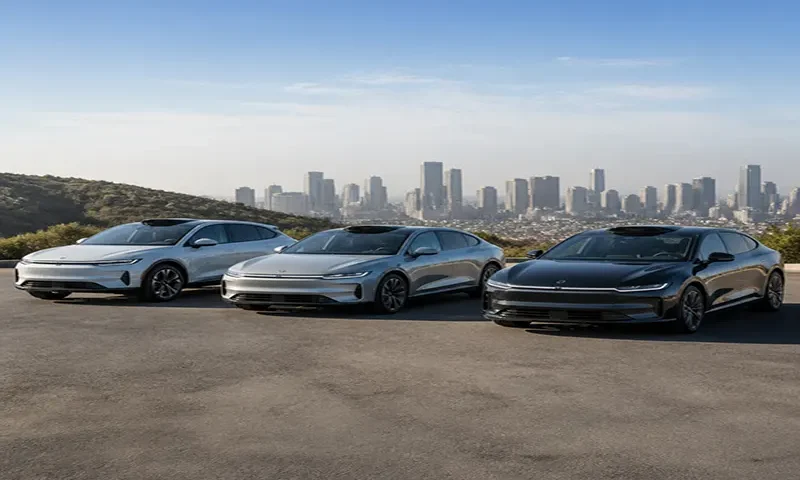
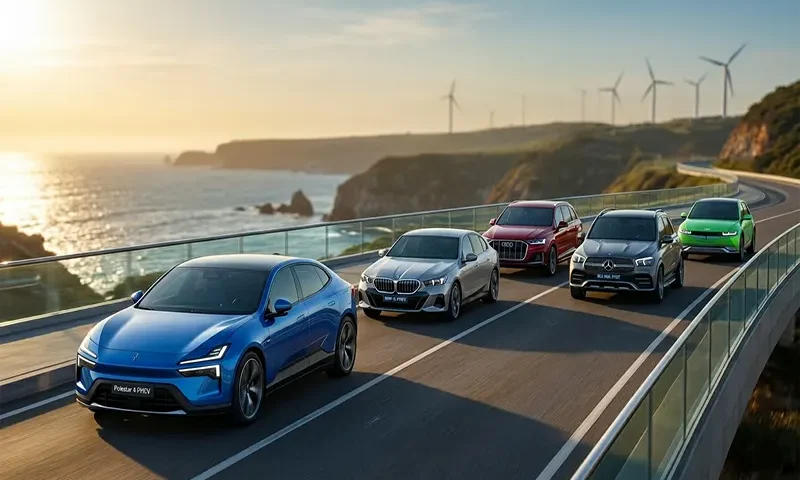
The 100-Mile Club: Best Plug-in Hybrid Cars with Extended Electric Range in 2026

For a decade, the Plug-in Hybrid Electric Vehicle (PHEV) was often viewed as a compromise—a “compliance car” with just enough battery to satisfy tax credits but not enough to change daily driving habits. In 2026, that narrative has officially shifted. We have entered the era of the Super Hybrid.

The 100-mile electric range is the new “tipping point.” At this threshold, a PHEV essentially functions as a full battery-electric vehicle (BEV) for the vast majority of weekly commutes, while retaining the “anywhere, anytime” flexibility of a gasoline engine for long-distance travel.

1. The Evolution of the ‘Super Hybrid’

In 2021, a “good” PHEV range was 30 miles. By 2026, breakthroughs in LMFP (Lithium Manganese Iron Phosphate) and high-density NMC (Nickel Manganese Cobalt) chemistries have allowed manufacturers to pack 25–40 kWh batteries into hybrid platforms without significantly encroaching on cabin or cargo space.

This evolution has transformed the PHEV from … READ MORE ...