
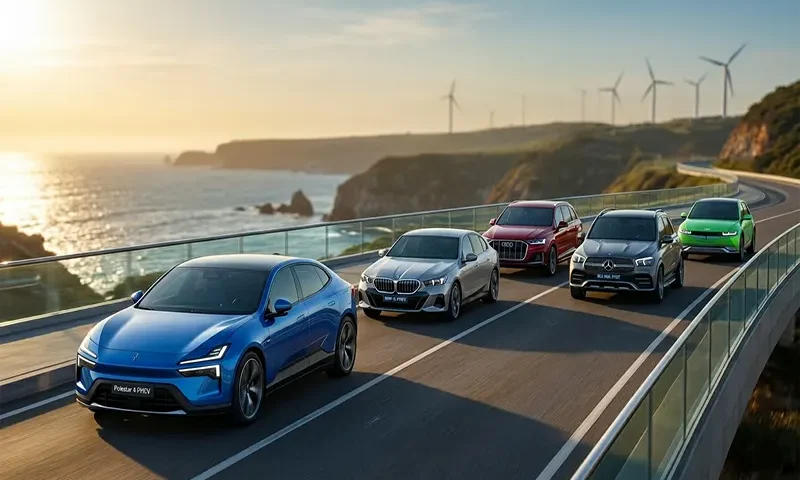
For a decade, the Plug-in Hybrid Electric Vehicle (PHEV) was often viewed as a compromise—a “compliance car” with just enough battery to satisfy tax credits but not enough to change daily driving habits. In 2026, that narrative has officially shifted. We have entered the era of the Super Hybrid.
The 100-mile electric range is the new “tipping point.” At this threshold, a PHEV essentially functions as a full battery-electric vehicle (BEV) for the vast majority of weekly commutes, while retaining the “anywhere, anytime” flexibility of a gasoline engine for long-distance travel.
1. The Evolution of the ‘Super Hybrid’
In 2021, a “good” PHEV range was 30 miles. By 2026, breakthroughs in LMFP (Lithium Manganese Iron Phosphate) and high-density NMC (Nickel Manganese Cobalt) chemistries have allowed manufacturers to pack 25–40 kWh batteries into hybrid platforms without significantly encroaching on cabin or cargo space.
This evolution has transformed the PHEV from a bridge technology into a primary solution for drivers who want zero-emission city driving but aren’t yet ready to rely solely on the public charging infrastructure for 500-mile road trips.
2. The Elite Contenders: 2026 Model Deep-Dives
The Disruptors: Chinese “Super Hybrids”
The most aggressive push toward the 100-mile mark has come from new market entrants.
- Omoda 9 (SHS-P): This medium-to-large SUV is a standout in 2026, boasting a quoted electric range of nearly 105 miles (170km) on the WLTP cycle. Utilizing a tri-motor setup and a massive battery for a hybrid, it offers genuine “EV-first” performance.
- Denza (BYD sub-brand): Several 2026 Denza models have officially joined the 100-mile club, utilizing BYD’s specialized hybrid blade battery tech to provide over 110 miles of quoted electric range while maintaining ultra-fast 0–60 times of 3.5 seconds.
The Luxury Benchmarks
European luxury brands have responded by nearly doubling their previous offerings:
- Volkswagen Golf eHybrid & Skoda Superb iV: While technically just shy of 100 miles, these models have hit a massive 88 miles (WLTP). For most Europeans, this covers three to four days of commuting on a single charge.
- Range Rover Sport P460e: The 2026 iteration offers up to 74 miles of range. While not hitting the triple digits, it uses a 3.0L 6-cylinder engine paired with a 160kW motor, providing enough range for 75% of average daily journeys in total silence.
- Mercedes-Benz E300e & GLE 450e: These models sit in the 50–72 mile bracket. While trailing the 100-mile leaders, they lead the segment in DC Fast Charging, capable of hitting 80% charge in just 20 minutes, making that 70-mile range highly “repeatable” throughout a single day.
The Mass-Market Stalwarts
- 2026 Toyota RAV4 PHEV: Fully redesigned for 2026, the new RAV4 (formerly the Prime) delivers an EPA-estimated 54 miles. While Toyota has prioritized efficiency and longevity over chasing the 100-mile headline, the RAV4 remains the benchmark for reliability in the PHEV space.
3. Engineering the 100-Mile Range
Achieving 100 miles requires more than just a bigger battery; it requires Dedicated Hybrid Engines (DHE). Unlike traditional engines modified for hybrid use, DHEs are engineered solely for maximum thermal efficiency. Since the electric motor handles all high-torque situations (like pulling away from a stop), the gas engine can be optimized to run at a constant, hyper-efficient RPM to maintain the battery level once it eventually depletes.
Furthermore, 2026 marks the standard inclusion of 80kW+ DC Fast Charging in PHEVs. Previously, PHEVs only supported slow AC charging. With 30kWh+ batteries now common, fast charging is essential for drivers to “top up” while grabbing coffee, effectively extending their daily EV range well beyond the 100-mile mark.
4. Economic & Environmental Impact
| Feature | 100-Mile PHEV | Full BEV | Traditional Hybrid |
| Commute Cost | Low (Electric) | Ultra-Low (Electric) | Moderate (Gas) |
| Range Anxiety | Zero | Moderate/High | Zero |
| Weight | High (Two Powerplants) | Very High (Large Battery) | Low |
| 2026 Resale Value | High (Versatility) | High | Declining |
While a 100-mile PHEV is heavier due to the dual powertrain, it offers a lower Total Cost of Ownership (TCO) for those who cannot commit to a single-car BEV lifestyle. However, there is an “Empty Battery” penalty: once the 100 miles are up, you are hauling a heavy battery using a small gas engine. To maximize the environmental benefits, these cars must be plugged in daily.
5. Buyer’s Guide: Is a 100-Mile PHEV Right for You?
A 100-mile PHEV is your ideal vehicle if:
- Your daily round-trip commute is under 90 miles.
- You have access to Level 2 charging at home or work.
- You take frequent weekend trips to areas with unreliable charging infrastructure.
- You need a vehicle with V2L (Vehicle-to-Load) capabilities to power tools or camping gear—a feature becoming standard in 2026 PHEVs.
The End of Range Anxiety
The 2026 crop of 100-mile PHEVs has effectively ended range anxiety. By providing enough electric range for “total EV living” during the week and the safety net of gasoline for the weekend, these vehicles represent the most pragmatic approach to decarbonization for the average driver. The “100-Mile Club” isn’t just a technical milestone; it’s the moment the hybrid finally came of age.

