
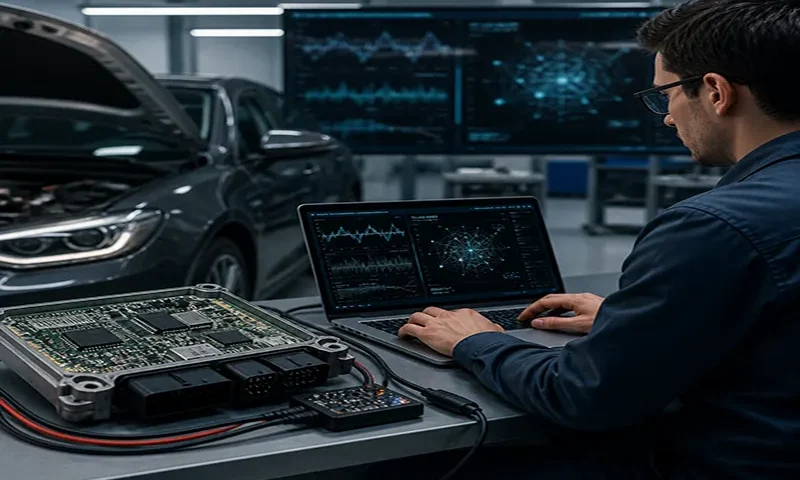
Beyond the Fault Code: Using AI Predictive Diagnostics to Identify ECU Hardware Failure Symptoms
In the automotive engineering landscape of 2026, the traditional “Check Engine Light” has become an artifact of the past. As vehicles transition into high-performance Software-Defined Vehicles (SDVs), the industry has moved beyond reactive Diagnostic Trouble Codes (DTCs) toward agentic, real-time Prognostics and Health Management (PHM).
Today, the goal is no longer to identify that a module has failed, but to detect the “micro-symptoms” of hardware degradation weeks before a malfunction occurs. By leveraging Agentic AI at the edge, modern EVs can now sense their own digital pulse, identifying imminent hardware failures in Electronic Control Units (ECUs) that were previously invisible to rule-based systems.
1. The Physics of ECU Failure: Identifying “Silent Symptoms”
Hardware failure in an ECU rarely happens instantaneously. It is usually the result of long-term stressors—thermal cycling, vibration, or electrical overstress—that leave measurable traces in the vehicle’s telemetry. AI models in 2026 are trained to identify … READ MORE ...
