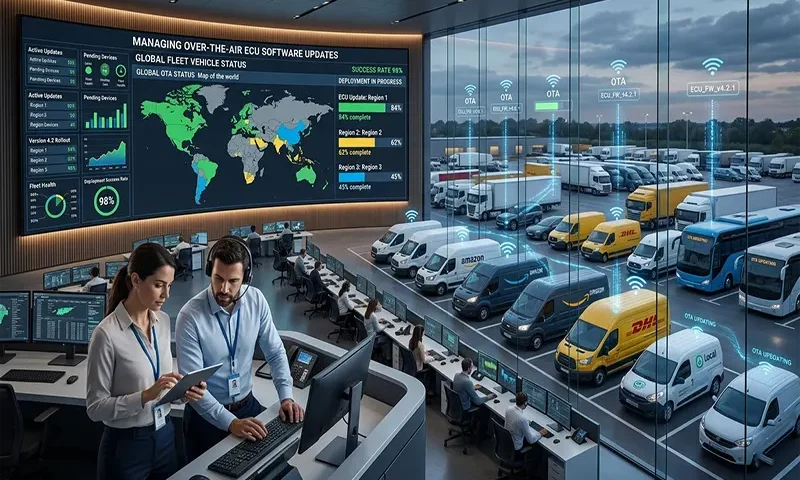

Managing Over-the-Air (OTA) ECU Software Updates for Fleet Vehicles

The automotive landscape has undergone a tectonic shift. In 2026, the vehicle is no longer a static piece of hardware but a Software-Defined Vehicle (SDV). For fleet operators, this evolution has transformed maintenance from a purely mechanical endeavor into a complex digital orchestration task. Transitioning from manual, dealership-based servicing to mass Over-the-Air (OTA) updates is no longer an “innovation”—it is a logistical necessity to reduce downtime, mitigate costly recalls, and ensure that thousands of mobile assets remain secure and compliant.

1. Regulatory Compliance & Engineering Standards

In the current regulatory environment, “pushing an update” is a high-stakes legal procedure. Fleet managers must operate within the framework of UNECE UN R156, which mandates a certified Software Update Management System (SUMS). This regulation ensures that every update is documented, traceable, and safe.

Furthermore, ISO 24089 provides the engineering roadmap for secure software update processes. Under these standards, updates are … READ MORE ...

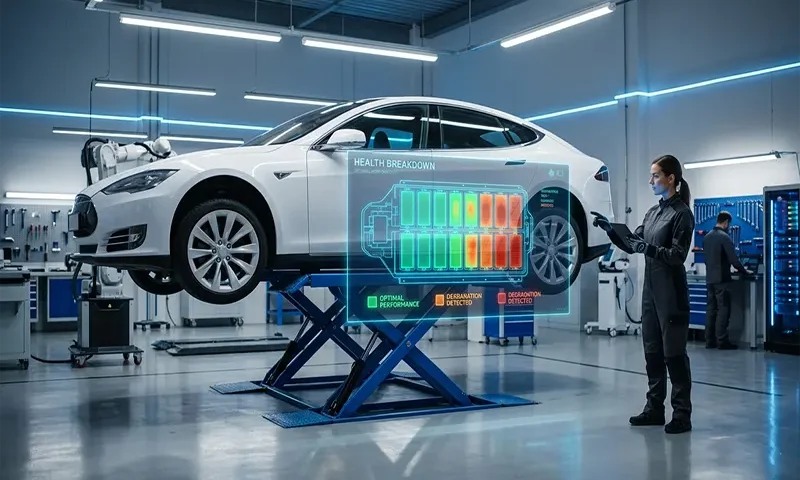
Diagnostic Tools for Checking Electric Car Battery Health and Degradation

The traction battery is the most critical and expensive component of an electric vehicle (EV), directly dictating the vehicle’s range, performance, and resale value. As the EV market matures in 2026, understanding the distinction between State of Charge (SoC)—the remaining energy for the current trip—and State of Health (SoH)—the permanent capacity remaining compared to the battery’s original state—has become essential for owners and technicians alike. Monitoring battery health is not just about range; it is a critical safety and economic imperative (Njoku et al., 2025).

The Science of Battery Degradation

Battery degradation is a complex physical and chemical process. It is primarily driven by mechanisms such as Solid Electrolyte Interphase (SEI) layer growth, lithium plating, and thermal stress (Anandavel et al., 2021). These processes lead to increased internal resistance, which causes voltage drops under load and reduces the total energy the battery can hold (Rao et … READ MORE ...

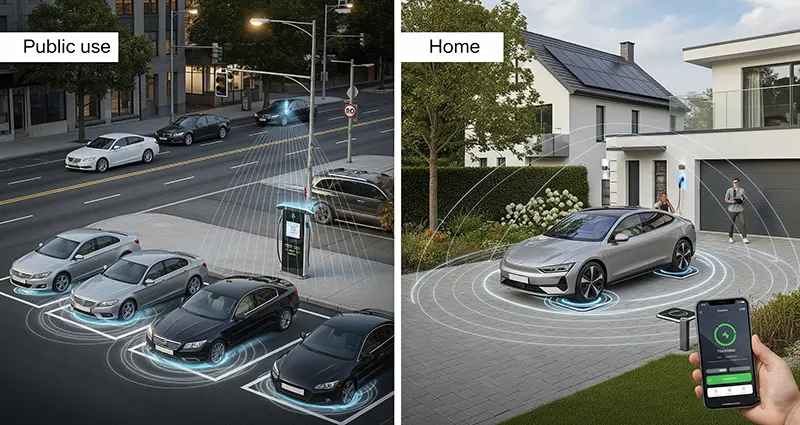
Wireless EV Charging Infrastructure Advancements for Public and Home Use

As electric vehicles (EVs) become increasingly popular, the need for convenient and efficient charging solutions has never been greater. One of the most promising developments in this space is the advancement of wireless EV charging infrastructure for both public and home use. Wireless charging technology aims to simplify the charging process, enhance user experience, and accelerate the adoption of electric vehicles worldwide.

Understanding Wireless EV Charging

Wireless EV charging, also known as inductive charging, allows electric vehicles to recharge their batteries without the need for physical connectors or cables. This technology typically employs electromagnetic fields generated between a charging pad installed on the ground and a receiver coil installed in the vehicle. When the car is parked over the pad, power is transferred wirelessly, charging the vehicle efficiently and safely.

Recent Advancements in Wireless EV Charging Infrastructure

1. Increased Charging Efficiency

Early wireless charging systems suffered from energy losses and … READ MORE ...

Supply Chain Challenges for EV Charging Port Components and Semiconductors

The rapid growth of the electric vehicle (EV) market has brought unprecedented demand for critical components such as charging port parts and semiconductors. These components are essential to ensuring that EVs operate efficiently and meet consumer expectations for range, charging speed, and safety. However, the industry is currently grappling with significant supply chain challenges that threaten to slow down production and delay EV adoption worldwide.

The Importance of Charging Port Components and Semiconductors in EVs

Charging port components connect EV batteries to external power sources, enabling convenient and fast recharging. These include connectors, cables, inlets, and control electronics designed for high power transfer and durability under frequent use.

Semiconductors, the backbone of modern automotive electronics, control everything from battery management systems and inverters to infotainment and advanced driver assistance systems (ADAS). Their role in power conversion and communication is crucial in optimizing EV performance and safety.

Key Supply Chain Challenges

READ MORE ...
What about office space for business setup in Dubai?

Key Takeaways:

  • A physical office space or a recognized equivalent is a mandatory requirement for any Business setup in Dubai.
  • Mainland companies typically require a traditional physical office with an Ejari-registered tenancy contract.
  • Free zones offer flexible office solutions, including flexi-desks, co-working spaces, and virtual offices, which can fulfill the physical presence requirement.
  • The size and type of office space often dictate the number of residency visas a company can obtain.
  • Choosing the right office solution impacts both initial costs and long-term operational flexibility for your Business setup in Dubai.

The question “What about office space for Business setup in Dubai?” is fundamental for any entrepreneur planning to establish a presence in the emirate. Unlike some jurisdictions where a purely virtual presence might suffice, Dubai’s regulatory framework, whether on the mainland or within its numerous free zones, almost invariably mandates some form of physical presence. This … READ MORE ...