

Top software defined vehicles with subscription based feature updates 2026
The year 2026 marks the definitive end of the “static car.” The automotive industry has fully pivoted to Software-Defined Vehicles (SDVs), where a car’s capabilities are no longer frozen at the moment it leaves the factory. By decoupling hardware from software through zonal architecture, manufacturers are now treating cars as rolling smartphones, offering continuous performance tuning and “Features on Demand” (FoD) via subscription.
1. The SDV Pioneers of 2026
Tesla: The V12 Ecosystem
Tesla remains the benchmark for digital-native OEMs. In 2026, the focus has shifted from simple range updates to sophisticated AI integration.
- Full Self-Driving (Supervised): Now a streamlined $99/month subscription. Tesla’s 2026 “End-to-End” neural networks handle city streets and highway transitions with human-like fluidity.
- Premium Connectivity: At $9.99/month, this is essential for 2026’s entertainment-heavy cabins, providing live traffic, satellite maps, and high-bandwidth streaming for the integrated gaming platform.
Mercedes-Benz: The MB.OS “Supercomputer”
With the launch … READ MORE ...


The Digital Squeeze: Optimizing Hybrid ECU Mapping for Peak Efficiency and Kinetic Recovery in 2026
In the automotive engineering landscape of 2026, the mechanical limits of internal combustion engines (ICE) and electric motors (e-motors) have largely stabilized. The true frontier of performance now lies in the Vehicle Control Unit (VCU) and Electronic Control Unit (ECU). Optimization has moved beyond simple power increases; it is now a game of Energy Management Strategy (EMS)—the sophisticated orchestration of when, how, and where energy is deployed or harvested.
By leveraging 2026 standards in Software-Defined Powertrains, engineers can now recalibrate hybrid systems to achieve fuel savings of 15% or more while simultaneously enhancing regenerative braking recovery through advanced algorithm mapping.
1. The Shift to Optimization-Based Control
For years, hybrid ECUs operated on rule-based “If-Then” logic (e.g., If speed < 20mph AND battery > 30%, use EV mode). In 2026, these rigid rules have been replaced by Equivalent Consumption Minimization Strategies (ECMS) and Deep Reinforcement Learning (DRL)… READ MORE ...

The Precision Standard: Finding Qualified Mechanics for ADAS Recalibration After Windshield or Bumper Repair (2026 Edition)
In the automotive repair landscape of 2026, a “fender bender” is no longer just a cosmetic event. As Advanced Driver Assistance Systems (ADAS) have become standard on nearly every vehicle produced in the last decade, a simple windshield swap or a bumper replacement has evolved into a high-stakes technological recalibration.
The most significant safety risk for drivers today isn’t the physical repair itself—it’s the “Calibration Gap.” This is the invisible space between a visually perfect repair and a sensor that is functionally blind or misaligned. In 2026, “repaired” does not mean “ready” until the vehicle’s digital eyes are perfectly realigned.
1. The 1/10th of a Degree Rule
To understand the necessity of recalibration, one must understand the Magnification Effect. Your car’s forward-facing camera and radar units are precision instruments. If a radar sensor in the front bumper is misaligned by a mere 1.0° (one degree), it may not … READ MORE ...

The Ethical Audit: How to Use the EV Battery Passport to Trace Mineral Origins in Used Electric Vehicles
In 2026, the used electric vehicle (EV) market has reached a critical turning point. While “range anxiety” dominated the conversations of the past decade, today’s buyers are focused on ethical accountability and long-term durability. With the full implementation of the EU Battery Regulation and the global adoption of Digital Battery Passports (DPPs), a used car’s value is now tied to its digital “birth certificate.”
For the first time, used car buyers can peel back the layers of a vehicle’s history to see not just where it was driven, but where its raw materials were birthed. This guide provides a roadmap for auditing the mineral traceability of a used EV using the 2026 Digital Battery Passport standard.
1. The New Standard of Transparency
The 2026 Battery Passport mandate has transformed the high-voltage battery from a “black box” into a transparent ledger. This digital twin follows the battery from the … READ MORE ...
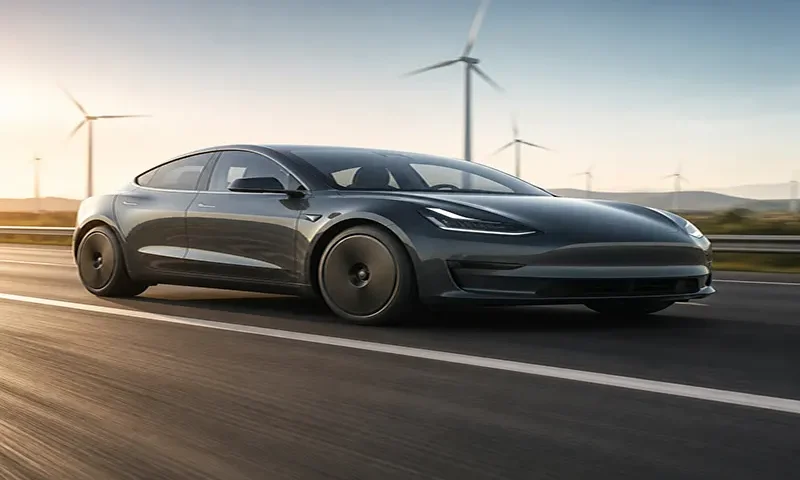
Slicing the Wind: How Aftermarket Aerodynamic Wheel Covers Maximize Electric Car Range in 2026
In the world of internal combustion, horsepower was king. In 2026, the crown has shifted to efficiency. For Electric Vehicle (EV) owners, the quest to squeeze every possible mile out of a kilowatt-hour has led to a resurgence of a once-overlooked accessory: the aerodynamic wheel cover.
While many view wheels as purely aesthetic, engineers know they are an aerodynamic nightmare. As a vehicle moves, the wheels are responsible for roughly 25–30% of its total aerodynamic drag. In the software-defined EV era, aftermarket aero covers have evolved from “cheap plastic hubcaps” into precision-engineered performance tools that can significantly alter your vehicle’s range profile.
1. The Physics of Airflow: Laminar vs. Turbulent
To understand why aero covers work, we must look at how air behaves around a spinning wheel. At highway speeds (above 60 mph), the air hitting the side of your car wants to stay “attached” to the body … READ MORE ...