
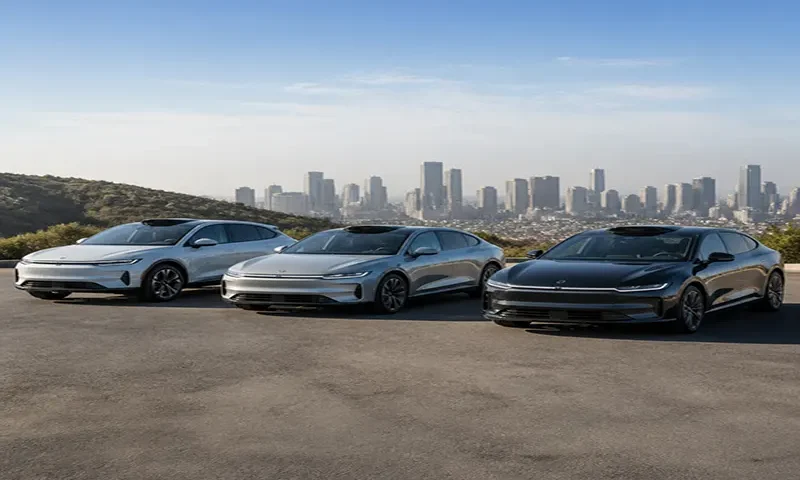
Cars with level 3 autonomous driving features available for purchase 2026
As of May 2026, if you are looking to purchase a vehicle that legally allows for “Eyes-Off” driving, the options are highly specialized and geofenced.
1. Mercedes-Benz: The Global Leader
Mercedes-Benz remains the primary manufacturer offering a certified Level 3 system to consumers, though the specific features available depend heavily on your location.
- DRIVE PILOT (Level 3)
- Available on: S-Class and EQS Sedan.
- Capability: In Nevada and California, DRIVE PILOT allows for hands-free, eyes-off driving in heavy highway traffic at speeds up to 40 mph. In Germany, an updated version supports speeds up to 81 mph (130 km/h).
- The 2026 Pivot: Interestingly, for the 2026 U.S. facelift of the S-Class, Mercedes has shifted toward MB. Drive Assist Pro (Level 2++). This system requires driver attentiveness (Eyes-On) but operates across more states and managing complex urban scenarios, as the brand recalibrates the high cost of Level

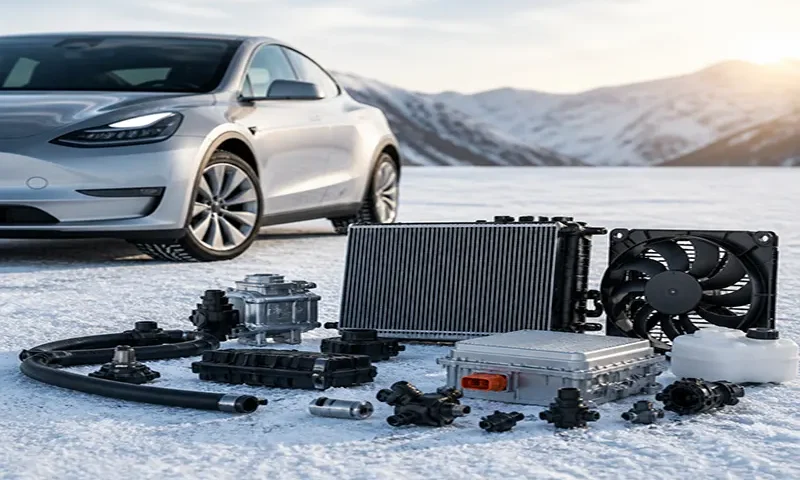
Winter Resilience: A Guide to EV Thermal Management System Replacement Parts in Cold Climates
As the electric vehicle (EV) market matures in 2026, the industry has shifted its focus from simple range extension to resilient engineering optimization. For drivers in cold climates, the Thermal Management System (TMS) is no longer a hidden background process; it is the single most critical factor for winter range and battery longevity.
The following guide details the specific replacement parts, engineering standards, and maintenance protocols required for EV thermal systems as they navigate the sub-zero challenges of 2026.
1. The Thermal Challenge: The “Goldilocks Zone”
Batteries are essentially chemical engines that perform best in a “Goldilocks Zone” of 15°C to 25°C. When ambient temperatures drop below freezing, internal resistance increases, and the chemistry becomes sluggish. In legacy EVs, this was countered by resistive heating—essentially a massive toaster element that drained up to 7kW of power.
In 2026, we have moved toward integrated heat pump loops. Instead … READ MORE ...
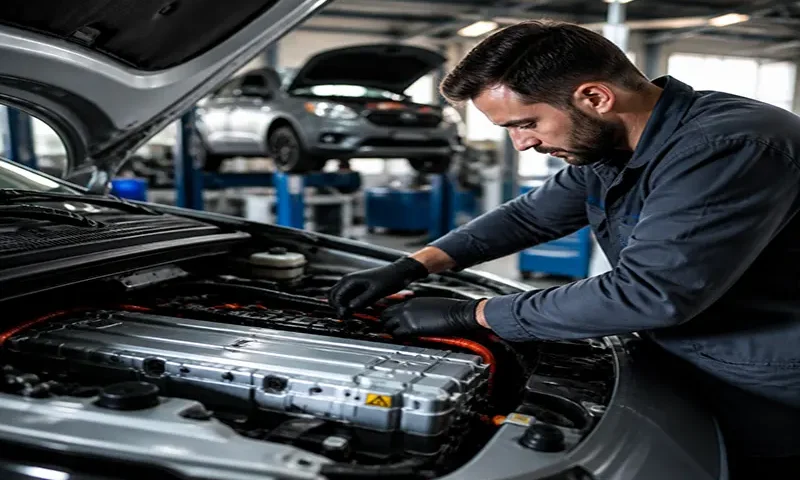
Restoring the Pulse: Finding the Best Local Mechanics for Hybrid Battery Conditioning and Cooling System Repair
In the automotive landscape of 2026, the “Red Triangle of Death” or a “Check Hybrid System” light is no longer a signal to scrap your vehicle. As hybrid technology has matured, a robust secondary market of independent specialists has emerged, offering alternatives to the high-cost “replace-only” culture of dealerships.
For the modern hybrid owner, maintaining the high-voltage (HV) system is a game of temperature and chemistry. Understanding how to find the right local expert for battery conditioning and cooling system repair can extend your vehicle’s lifespan by 5–7 years while saving you thousands in unnecessary hardware replacements.
1. The Longevity Paradox: Conditioning vs. Replacement
One of the most persistent myths in 2026 is that a hybrid battery is a single, monolithic part that fails all at once. In reality, a hybrid pack is a collection of individual modules. Over time, these modules drift out of balance—some overcharging while others underperform.… READ MORE ...
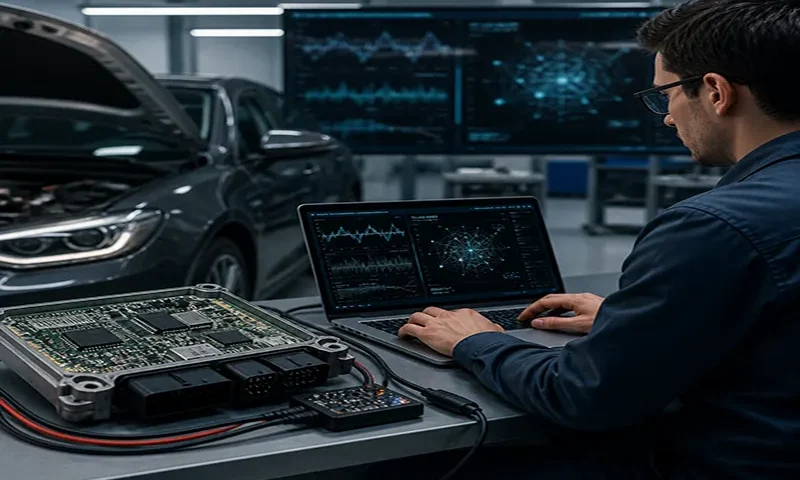
Beyond the Fault Code: Using AI Predictive Diagnostics to Identify ECU Hardware Failure Symptoms
In the automotive engineering landscape of 2026, the traditional “Check Engine Light” has become an artifact of the past. As vehicles transition into high-performance Software-Defined Vehicles (SDVs), the industry has moved beyond reactive Diagnostic Trouble Codes (DTCs) toward agentic, real-time Prognostics and Health Management (PHM).
Today, the goal is no longer to identify that a module has failed, but to detect the “micro-symptoms” of hardware degradation weeks before a malfunction occurs. By leveraging Agentic AI at the edge, modern EVs can now sense their own digital pulse, identifying imminent hardware failures in Electronic Control Units (ECUs) that were previously invisible to rule-based systems.
1. The Physics of ECU Failure: Identifying “Silent Symptoms”
Hardware failure in an ECU rarely happens instantaneously. It is usually the result of long-term stressors—thermal cycling, vibration, or electrical overstress—that leave measurable traces in the vehicle’s telemetry. AI models in 2026 are trained to identify … READ MORE ...
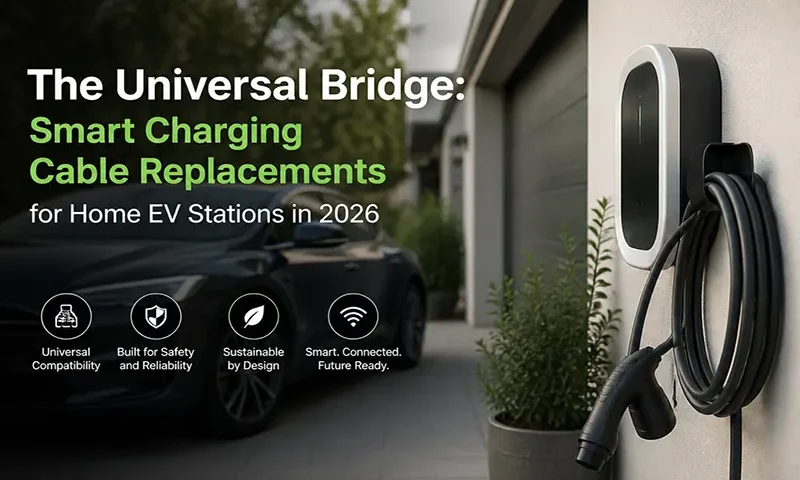
The Universal Bridge: Smart Charging Cable Replacements for Home EV Stations in 2026
The home garage has transformed. No longer just a storage space for vehicles, it has become a sophisticated energy hub where the grid, the home, and the vehicle converge. As we move through 2026, the most critical piece of this infrastructure isn’t necessarily the wallbox itself, but the tether that connects it to the car.
The modern charging cable is no longer a “dumb” copper wire; it is a high-speed data link and a smart power regulator. With the industry-wide shift toward the North American Charging Standard (NACS), homeowners are facing a “Universal Dilemma”: how to manage a household that may have one legacy J1772 vehicle and one new NACS-native vehicle without cluttering the garage with multiple stations and tangled adapters.
1. The Shift to Universal Interoperability
By 2026, NACS has become the dominant port for new EVs in North America, but millions of perfectly functional J1772-equipped vehicles remain … READ MORE ...